Sources: RNZAF, ABC, RNZ. A fisherman missing for a week at sea was found alive in an extraordinary rescue by the Royal New Zealand Air Force (RNZAF) P-8A Poseidon crew.
Apiuta “Pone” Apiuta had set off from Pukapuka Island, a remote coral atoll about 1,140km northwest of Rarotonga, for a day’s fishing.
He failed to return and his family first raised the alarm with Cook Islands Police, before escalating concerns to New Zealand authorities.
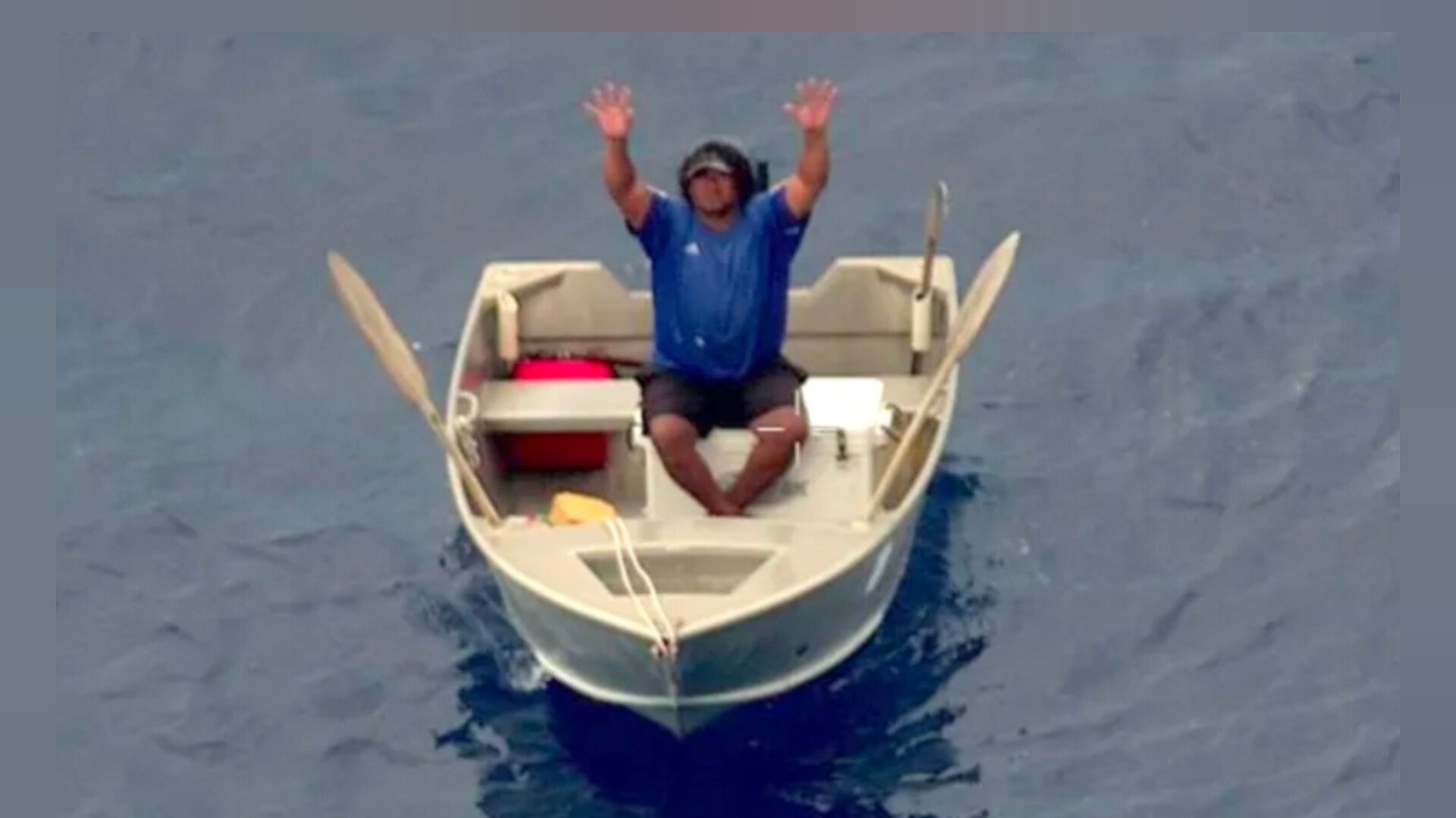
On Friday, June 19, authorities said in a release that the Poseidon crew found the man in his 13-foot aluminum rowboat that morning, and he eas plucked out of the ocean by the crew of a Taiwanese fishing vessel.https://samoaglobalnews.com/fisherman-missing-at-sea-for-7-days-found-alive-wearing-t-shirt-and-shorts-in-tiny-13-foot-boat/
A picture shared in the release by the New Zealand Defence Force (NZDF) showed the man waving his arms to rescuers while sporting a blue T-shirt, black shorts and a sports visor.
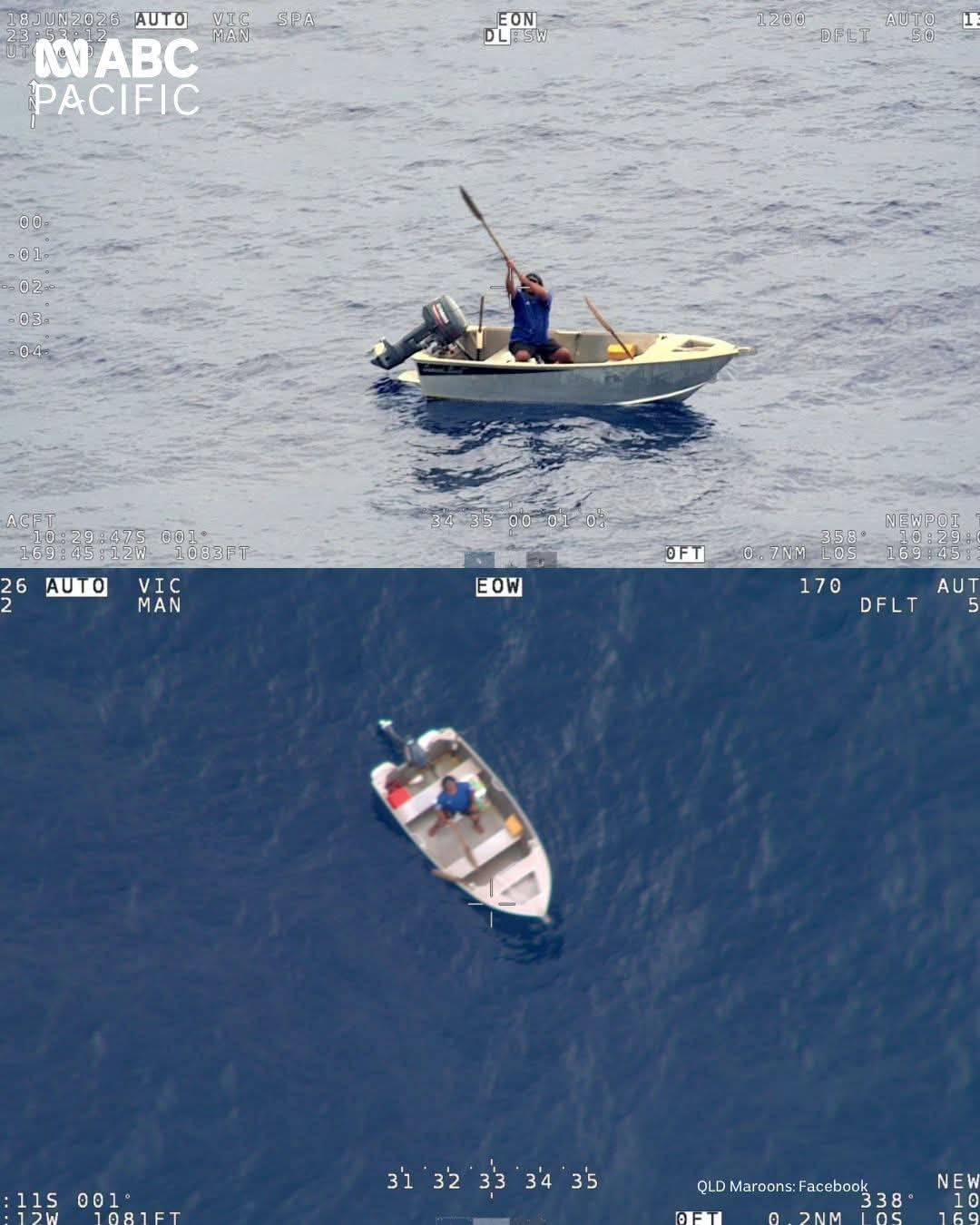
New Zealand’s maritime rescue coordination centre called on the assistance of a Royal New Zealand Air Force (RNZAF) crew Thursday, who found the solo fisherman Friday morning, with Apiuta waving at them.
“Everyone is so over the moon and thankful he has been found,” Marisa McGlynn, first cousin to Apiuta, told ABC Pacific.
“My sister Teresa was the one who contacted the NZ government as we were so concerned there wasn’t much action happening on the search for Pone.
“We want all Cook Islanders to know there is a process if a loved one is missing at sea. Help is there and you can escalate things to get more support.”
The wider Pukapukan and Cook Islands community has expressed deep gratitude to those who refused to give up the search.
In an interview with Matthew Theunissen of RNZ Apiuta Apiuta, also known as Pone, from the tiny island of Pukapuka, said he was cold everyday and on two occasions he fell out of his tiny boat.
Before he went home to the Cook Islands, Apiuta was visiting relieved relatives in Auckland including his mom.

Apiuta said he spent the day playing in a volleyball tournament on the powdery white sand of the tiny coral atoll of Pukapuka.
However, he was anxious to get his dinghy out before it got too late, so he could catch a feed for his family and others in the community. In his haste, he forgot to take his torch or his lifejacket. This would prove to be a very bad mistake.

“I was catching a few fish until I had around six or seven fish in my boat, I thought, I’d catch another one,” he said.
It was after he’d hauled in his ninth fish that the outboard motor started playing up and, eventually, went completely dead.
“It was getting darker, the sunset [had] already dropped.

He drained the motor and replaced the fuel, but it made no difference. He had two oars and tried to haul his way to shore, but the wind was too strong, and he started drifting from the island.
“I could see that the men on the island were looking for me, I could see them with their lights. I didn’t take a torch with me.”
Apiuta had around three litres of water, pocket knife, a pair of long-nosed pliers, a bucket and the rest of his fishing gear.

After his first chilly night, he could no longer see the island. He ate a little of one of the fish he had caught the previous day, then the weather turned.
“The sea was rough – really rough – and the wind, very strong. Waves were breaking into the boat,” he said.
He spent lots of energy using the oars to ensure the boat didn’t capsize. The storm lasted four days, he said.
“The waves that hit me, twice I fell off the boat.”
The rain was near constant, too, so at least he was able to collect drinking water in his bucket. But it was so cold.

“It was cold every day; day and night.
He was only wearing shorts and a T-shirt.
However, he said his survival instincts kicked in and he refused to be defeated by his situation. And for some of the time he had company.
“There was this one bird that flew on my boat and stayed with me the whole day. It’s a bird that we call in our language tākapu. That bird stayed with me the whole day until the next morning,” he said. “To me it’s like a good sign.”

He said he spoke to the bird.
“I said, ‘go find his friends and fly me back to the island’,” he laughed.

The plane was blinking its lights so Apiuta could be sure he’d been spotted.
That evening, he was picked up by a Taiwanese fishing vessel. The crew took him straight to the kitchen and fed him noodles, which he enjoyed very much.
Apiuta was then able to make a phone call from the vessel to his anxious partner, who passed on the happy news to his mother and siblings in New Zealand.

His sister, Tina, said she always believed Apiuta would make it, but getting the phone call confirming he was still alive was overwhelming.
“I ran to mum’s room – mum was sleeping – and we started crying together. And then his son called at that exact time and had a conversation when mum and they both started crying on the phone together as well.”
Job Opportunities


- Funemalafai Ono Fuatai Elected National President of SUNGO - November 27, 2026
- New Zealand: More than 10,500 students will re-sit NCEA Level 2 English exam - November 27, 2026
- 25 November 1960 – Three Sisters Clubbed to Death Led to 16 Days of Activism - November 25, 2026