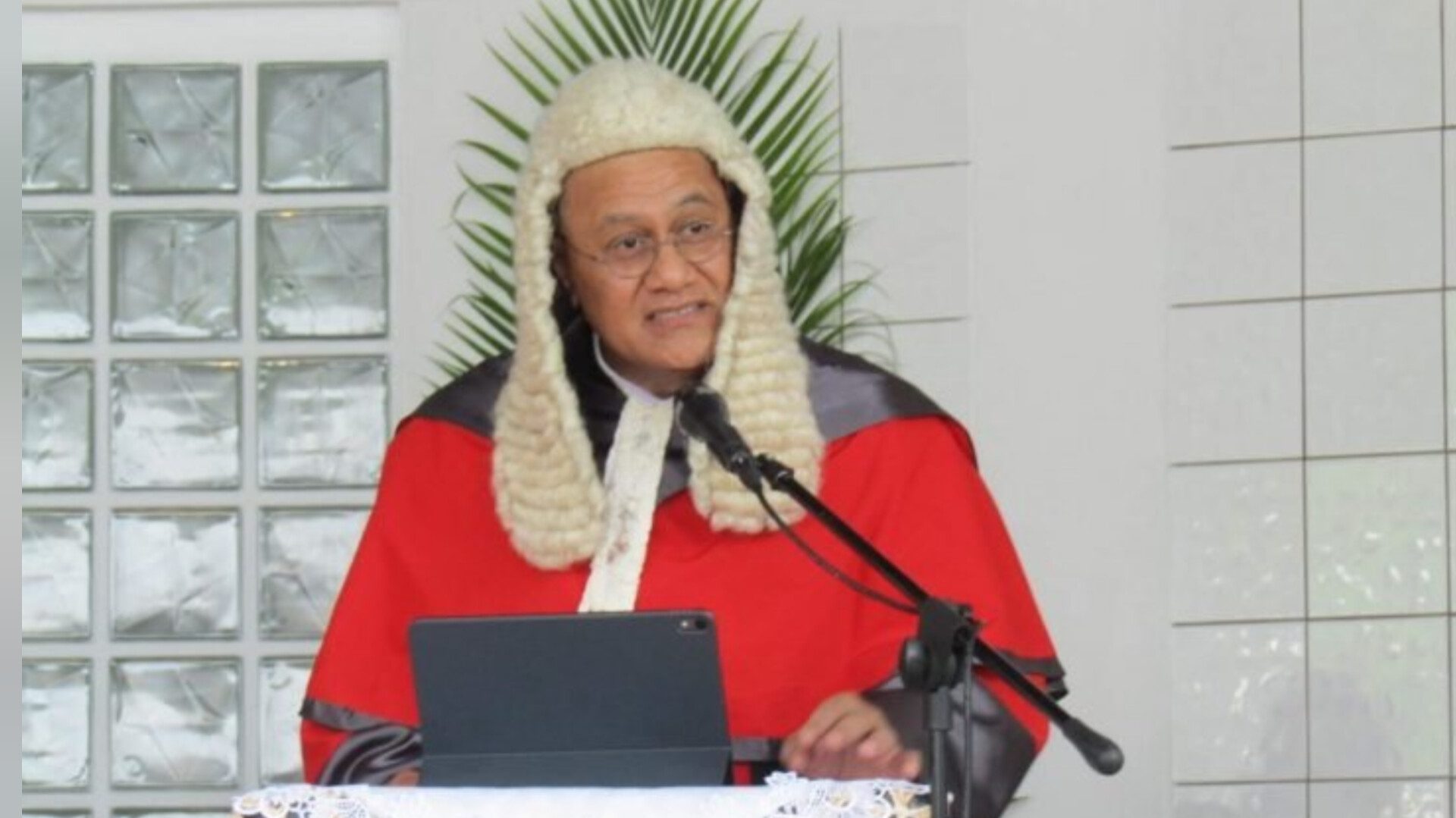
In handing down its decision on the electoral petition and counter petition between Tuiloma Lance Lameko and Hon Toelupe Pou Onesemo, Chief Justice Satiu Simativa Perese and Justice Leiataualesa Daryl Clarke raised ancilliary matters including what the Court described as “unchallenged evidence of a $100,000 bribe” according to a telephone recording and sworn affidavits submitted by HRPP MP, Namulauulu Sami Leota.
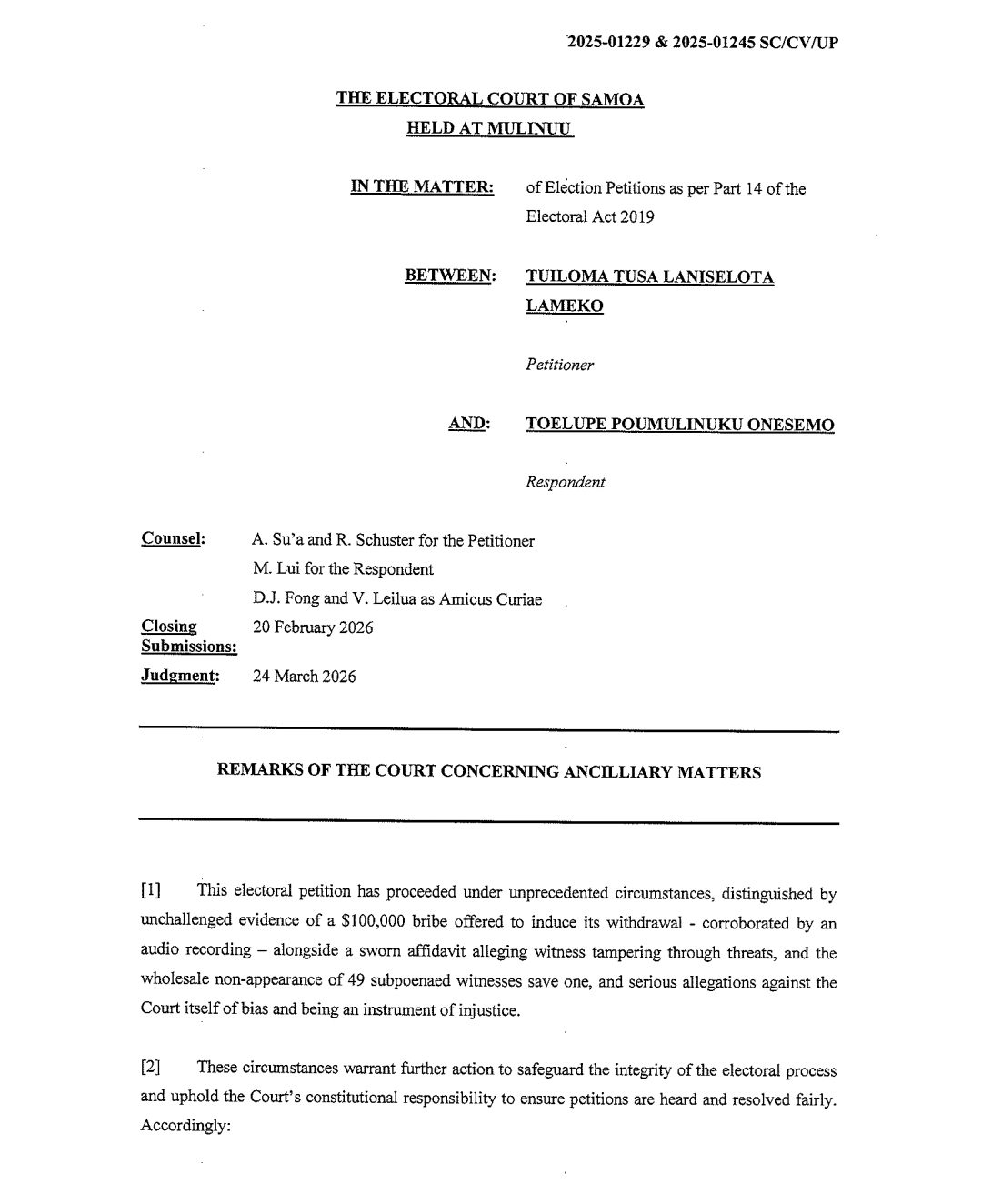
REMARKS OF THE COURT CONCERNING ANCILLIARY MATTERS
[1]This electoral petition has proceeded under unprecedented circumstances, distinguished by unchallenged evidence of a $100,000 bribe offered to induce its withdrawal – corroborated by an audio recording – alongside a sworn affidavit alleging witness tampering through threats, and the wholesale non-appearance of 49 subpoenaed witnesses save one, and serious allegations against the Court itself of bias and being an instrument of injustice.
[2]These circumstances warrant further action to safeguard the integrity of the electoral process and uphold the Court’s constitutional responsibility to ensure petitions are heard and resolved fairly.
Accordingly:
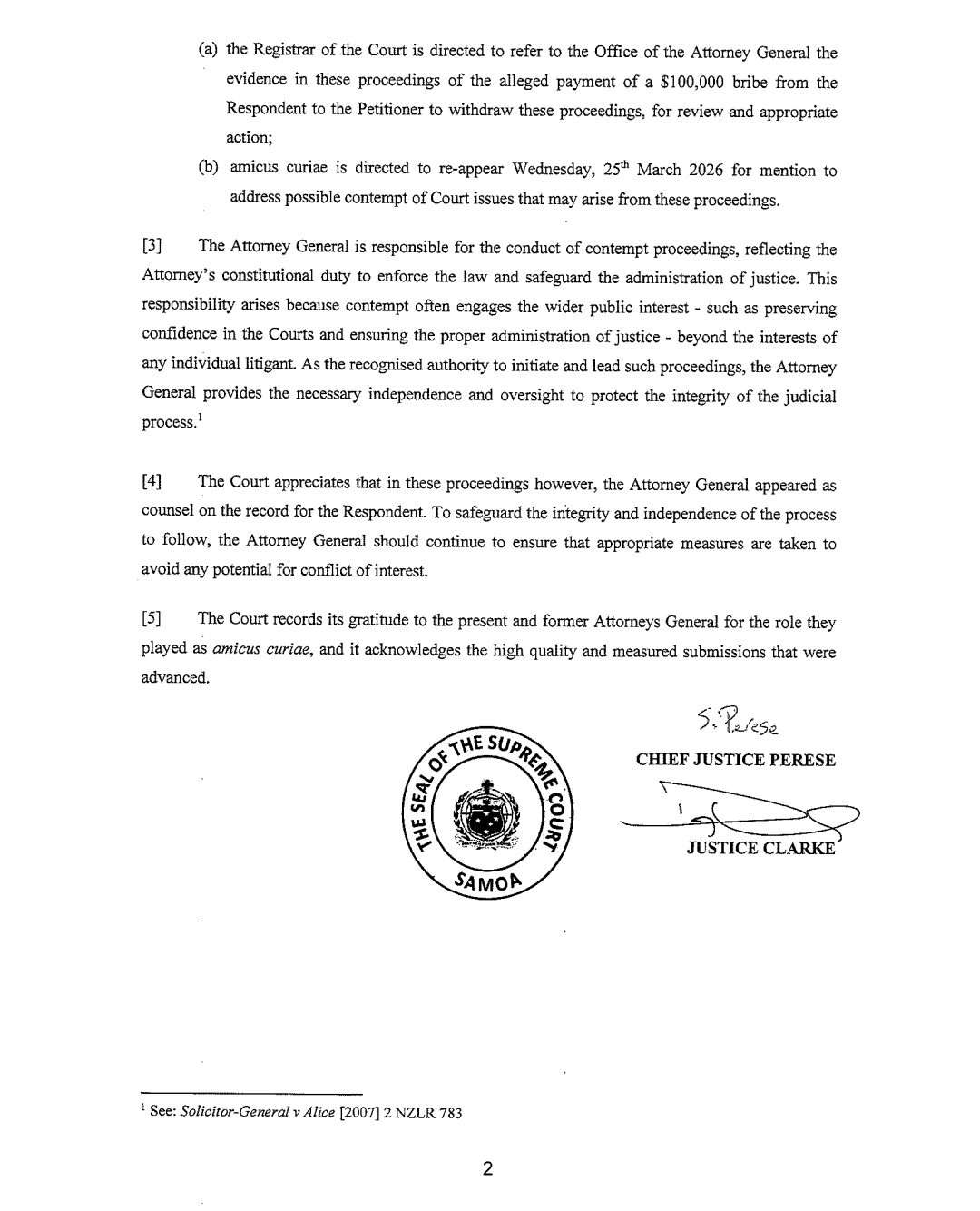
(a) the Registrar of the Court is directed to refer to the Office of the Attorney General the evidence in these proceedings of the alleged payment of a $100,000 bribe from the Respondent to the Petitioner to withdraw these proceedings, for review and appropriate action:
(b) amicus curiae is directed to re-appear Wednesday, 25 March 2026 for mention to address possible contempt of Court issues that may arise from these proceedings
[3]The Attorney General is responsible for the conduct of contempt proceedings, reflecting the Attorney’s constitutional duty to enforce the law and safeguard the administration of justice. This responsibility arises because contempt often engages the wider public interest – such as preserving confidence in the Courts and ensuring the proper administration of justice – beyond the interests of any individual litigant. As the recognised authority to initiate and lead such proceedings, the Attorney General provides the necessary independence and oversight to protect the integrity of the judicial process.’
[4]The Court appreciates that in these proceedings however, the Attorney General appeared as counsel on the record for the Respondent. To safeguard the integrity and independence of the process to follow, the Attorney General should continue to ensure that appropriate measures are taken to avoid any potential for conflict of interest
[5]The Court records its gratitude to the present and former Attorneys General for the role they played as amicus curiae, and it acknowledges the high quality and measured submissions that were advanced.

- Samatau Turns to Renewable Energy to Boost Food Production - November 25, 2026
- Samoa Joins Regional Efforts to Combat Maritime Drug Trafficking - November 25, 2026
- Pago Pago Airport Runway Reopens Following Talofa Airways Incident - November 25, 2026